Energy Transition Working Group hosts workshop on “Energy Transition & Impact on the End Consumer”




On 12 March, the Energy Transition Working Group organised a workshop focused on the theme of “Energy Transition & Impact on the End Consumer.”
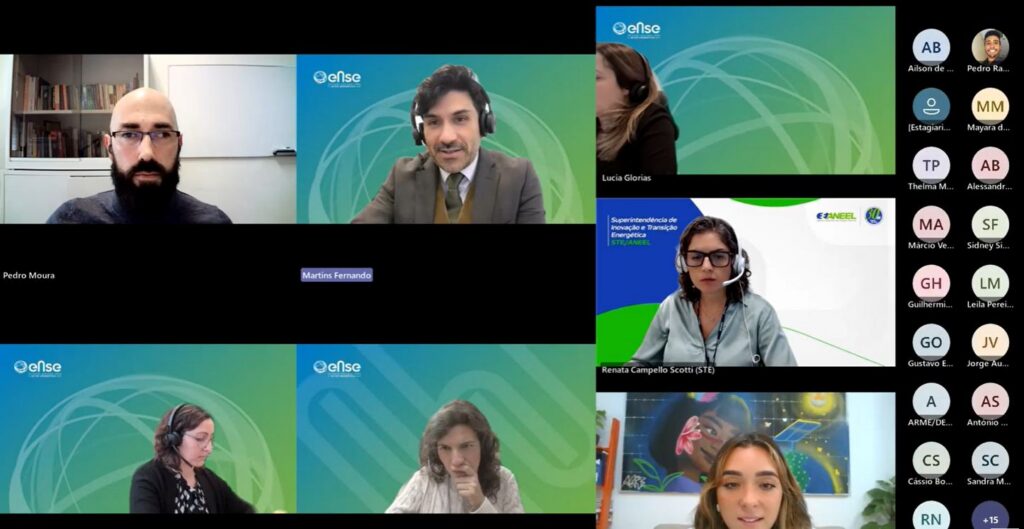
The event featured an opening session presented by Fernando Martins (Coordinator of the Energy Transition Working Group) from ENSE, and Renata Scotti (Co-coordinator of the Energy Transition Working Group) from ANEEL, who emphasised how essential it is to reflect on the direct impact that the energy transition has on the end consumer, especially at a time when it is emerging as one of the main economic, environmental and social challenges.
Between decarbonisation, the electrification of consumption, the diversification of energy sources and the evolution of the regulatory framework, there is a proliferation of changes influencing prices, technological choices and consumption patterns.
The workshop brought together two international experts to discuss the topic, with two presentations:
- The Energy Transition and the Consumer’s New Role in the Balance of the Electricity System – Pedro Moura, Professor at the Institute of Systems and Robotics at University of Coimbra (Portugal)
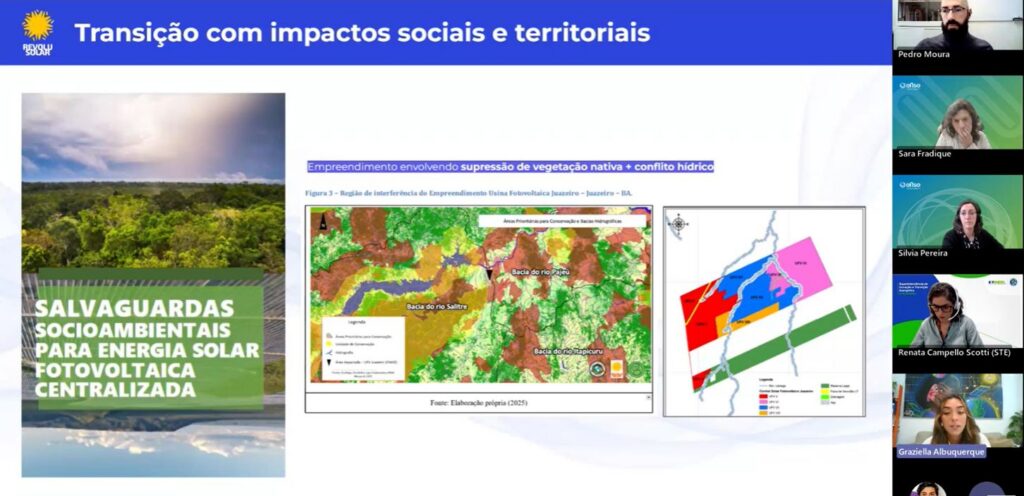
- A Fair and Inclusive Energy Transition and Transformation – Graziella Albuquerque, Director of Revolusolar (Brazil)
During the session, Professor Pedro Moura, from the University of Coimbra, explained that the electricity system is shifting from a centralised model to a decentralised one, with millions of distributed resources. This change requires greater flexibility and alters the balance of the system, which now also depends on consumers’ decisions.
It was also highlighted that, in the future, energy costs may focus more on the power used (kW) than on the energy consumed (kWh), reflecting the challenges of grid management and the integration of renewables.
The workshop also addressed the social dimension of the energy transition, with a focus on the case of Brazil. Despite the growth of renewable energy, challenges such as energy poverty, high costs and unequal access persist. Community solar projects have demonstrated a positive impact through cost reduction, local job creation and social inclusion.
These initiatives include the training of residents, the establishment of cooperatives, and sustainable energy management models. The direct involvement of residents ensures adhesion and a sense of belonging, with community participation being essential to the success and sustainability of the projects. Organisations have also been incorporating concerns regarding digital connectivity, promoting the responsible use of the internet through decisions developed in consultation with the communities themselves.
The main challenges identified relate to scale, funding and policy framework. It was also emphasised that, even without access to technologies such as solar photovoltaics, consumers can play an active role through energy efficiency and consumption management, helping to reduce costs and alleviate energy poverty.
This workshop provided a space for discussion and exchange on how the changes brought about by the energy transition are redefining the role of the consumer within the energy system, as well as the opportunities, risks and safeguards that this entails, and the different ways in which this is manifesting itself across various countries. Participants highlighted that the success of the energy transition will depend not only on technological innovation, but also on effective regulation, appropriate incentives and an inclusive approach that actively involves consumers.