Workshop of the Energy Transition Working Group on the topic “New Legal Framework for Electric Mobility”

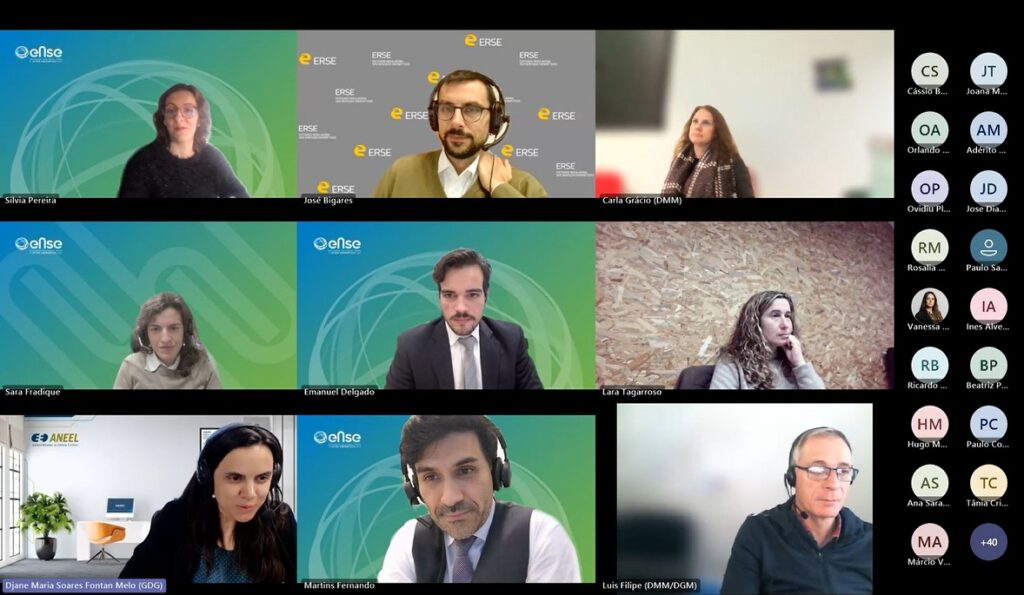



On 24 November, the Energy Transition Working Group (GTE) of RELOP – Association of Energy Regulators of Portuguese-speaking Countries – organised an online workshop, focusing on the theme ‘New Legal Framework for Electric Mobility’.
The session had presentations from representatives from ERSE and ENSE, from Portugal, who shared their approaches to the regulatory adaptation of electric mobility within the new legal framework, in particular the new rules and those necessary for the transition between the two models.
During the workshop, the importance of consolidating Lusophone cooperation was reinforced, as well as investing in innovative solutions that ensure a smooth transition between models and promote more sustainable, efficient and safer mobility.
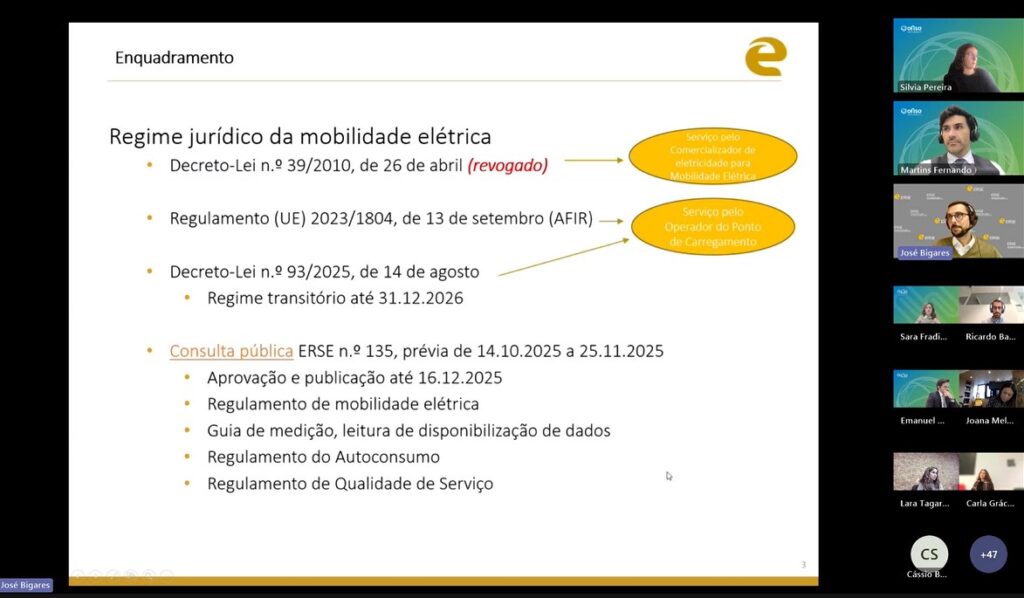
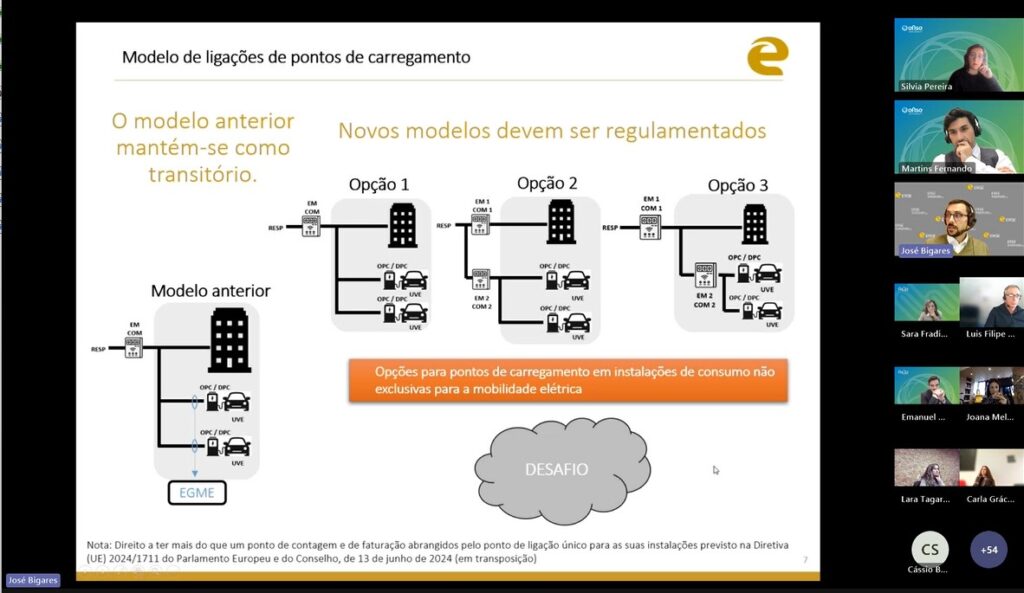
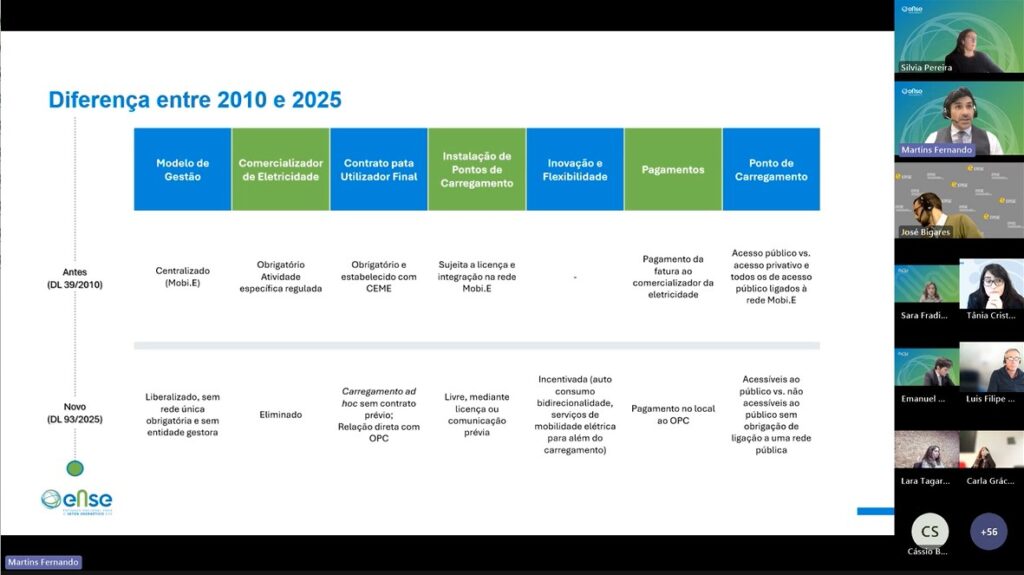
José Bigares, from ERSE’s Infrastructure and Networks Directorate, presented the regulations of the new legal regime for electric mobility, in particular Decree-Law No. 93/2025 of 14 August. His presentation focused on the main changes in the new legal framework for electric mobility. He highlighted the strengthening of the role of Charging Point Operators, the creation of mobility service providers and the data aggregator, bringing greater efficiency and simplicity to the relationship with users.
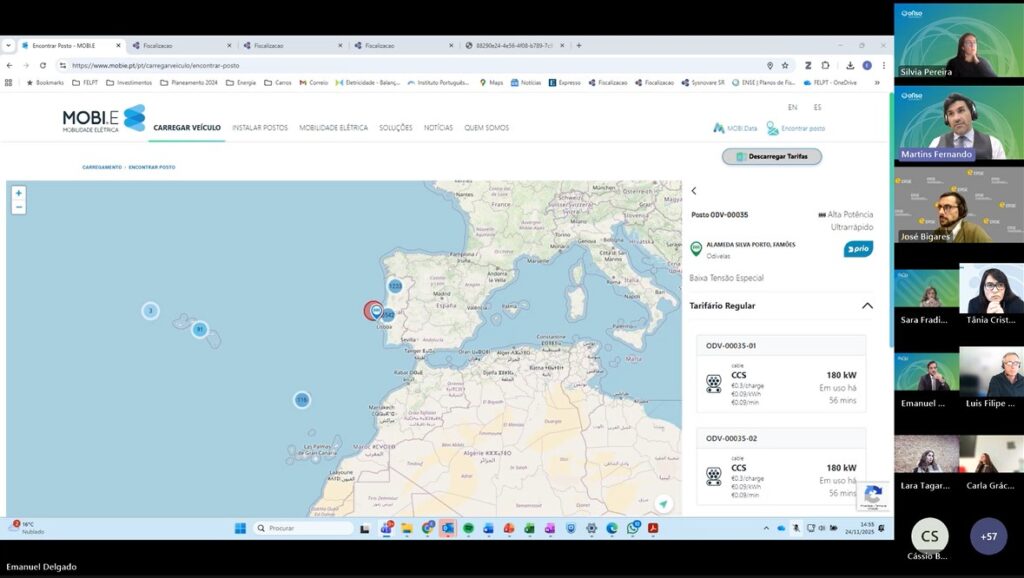
Next, Emanuel Delgado, Head of the Inspection Department, and Fernando Martins, Head of the Control and Prevention Unit at ENSE, presented the Portuguese model for electric mobility, focusing on operation, inspection and transparency. Fernando Martins highlighted the transformation of the sector over the last 15 years: from a centralised model to a more open, flexible and competitive market. The end of the specific marketer, ad hoc charging and the integration of solutions such as self-consumption, storage and smart charging promise a more intuitive experience and lower operating costs. Emanuel Delgado presented ENSE’s enforcement application, which has already enabled more than 375 actions since 2020, contributing to greater alignment of the sector with legal requirements.
The presentation of the electric mobility operational model in Portugal — including field operations, the national register of charging points, ENSE’s inspection checklist and real-life cases — highlighted how digital tools, robust processes and effective regulation are essential to ensure transparency, trust and resilience in a rapidly growing sector.
The workshop ended with a rich debate on licensing, tariffs, network quality and social inclusion, reinforcing the role of Lusophone cooperation in building a solid regulatory framework for a fair and sustainable energy transition.