Governments and Organizations Discussed Energy Transition and Carbon Markets at the 3rd CPLP Energy and Climate Seminar

After Cape Verde, the CPLP Energy and Climate Seminar Series brought together governments and organizations in Brazil to discuss energy transition and advancements in carbon market regulations among CPLP member states. The third seminar, held on November 4 at the Institute of Economics of the Federal University of Rio de Janeiro (UFRJ), was promoted by the Government of São Tomé and Príncipe, which holds the rotating presidency of the Community of Portuguese Language Countries (CPLP). It was organized in collaboration with the CPLP’s Advisory Observers’ Thematic Energy Commission, coordinated by the Lusophone Renewable Energy Association (ALER) and the Association of Energy Regulators of Portuguese-Speaking Countries (RELOP).

Mayra Pereira, President of ALER, opened her speech by cautioning that “in African countries, the issue of carbon markets is still in its early stages.” According to her, while most countries have environmental policies and laws, legislation around carbon markets is still being developed. Although ecological, social, and cultural diversity links Angola, Brazil, Guinea-Bissau, Equatorial Guinea, Mozambique, Portugal, São Tomé and Príncipe, and Timor-Leste, challenges remain in establishing carbon markets. Pereira emphasized the need to “view through the lens of Afrofuturism” to reimagine Africa and facilitate its access to these markets. She highlighted the importance of generating knowledge and sharing experiences collectively. “In Cape Verde [at the 2nd CPLP Energy and Climate Seminar], we initiated this principle of joint action,” she noted. Discussions at that seminar underscored the value of a united Portuguese-speaking Africa, with Portugal and Brazil serving as anchors for partnerships.

Sandoval Feitosa, President of RELOP, also emphasized the significant roles of Portugal and Brazil in integrating Portuguese-speaking countries into carbon markets. He pointed out that Portugal’s strategic location in Europe provides access to financing mechanisms that promote renewable energy development in Lusophone countries. Additionally, Brazil is a global reference point due to its renewable energy production potential, especially in hydropower, solar photovoltaic, and wind energy. “We have developed legislative mechanisms to incentivize renewable energy production, which, combined with a robust consumer market, creates a perfect ecosystem,” Feitosa said. He stressed the importance of knowledge sharing among nations with similar cultural roots. “Knowledge is useless if it remains isolated. (…) I strongly believe in the union of countries,” he concluded.

Gabriel Makengo, Director of Energy at São Tomé and Príncipe’s Ministry of Infrastructure and Natural Resources, highlighted that the carbon market is “not just an economic tool but an opportunity to promote sustainable development, align efforts against climate change, and ensure a prosperous and more equitable future.” Makengo described it as a strategic and collaborative response, enabling countries and companies to offset their emissions by investing in mitigation projects, such as clean technologies. “In the CPLP space, several members possess vast natural resources that play a critical role in carbon capture, especially through forests, soil, and marine ecosystems,” he said. These resources “are strategic assets that can be monetized through carbon markets, generating revenue to fund sustainable development and climate adaptation aligned with G20 guidelines,” he added. Makengo stressed that CPLP could play a vital role in policy coordination, sharing best practices, and technical support. Creating a common platform for carbon credit negotiation and strengthening scientific cooperation could be essential steps forward.

Carlos Alexandre Pires, a public policy and government management expert at Brazil’s National Secretariat for Climate Change, reminded attendees that Brazil had pioneered its energy transition during the 1970s and 1980s, albeit under different circumstances from today’s climate change-driven context. “There still persists, to some extent, (…) this narrative that Brazil has already undergone its energy transition while the rest of the world debates theirs,” he remarked. Although Brazil’s reality differs from other countries, Pires argued for addressing issues such as inequality and climate justice in the transition. “Our energy transition must be shaped to our advantage,” he emphasized. Given Brazil’s social and economic challenges, he said it is crucial to transform the transition into an opportunity for growth and ecological and energy transformation. Moreover, Pires called for making climate change and energy transition language clearer and more accessible to ordinary citizens. “There’s a whole jargon that needs to be addressed” so that “the citizen most vulnerable to climate change knows exactly what they need to do,” he concluded.

At the 3rd CPLP Energy and Climate Seminar, the main outcomes of the G20 Energy Transitions Working Group were highlighted, including the establishment of ten principles for a just and inclusive transition (aligned with the UN’s SDG7 and the first Global Stocktake instituted at COP28) and the creation of a global energy planning agreement for implementing more efficient and sustainable policies. Additionally, discussions were raised on net-zero emissions, deforestation, climate change adaptation, energy justice, and dignified access to energy. A roundtable followed, focusing on carbon market regulation in CPLP countries, particularly Angola, Brazil, Mozambique, and Portugal. The session shared legislative developments in regulated markets aimed at achieving carbon neutrality targets, guidelines for legally secure carbon certification, and examples of carbon market operations and credit processing. Various mechanisms for financing and incentivizing carbon credits were also analyzed, along with the challenges associated with them. Lastly, case studies of carbon credits in the energy sector of Angola, Brazil, Mozambique, and Portugal were presented.

Several representatives from CPLP Member States participated in the event and joined various panels. Notable participants included: José Bernardes from Portugal’s Ministry of Environment and Energy; Paula Panguene from Mozambique’s Ministry of Land and Environment; Rui Ferreira from Angola’s Ministry of Environment; Fernanda Castro from Brazil’s National Carbon Credit Institute; Ricardo Almeida, Attorney for the Municipality of Rio de Janeiro; Glauce Botelho from Brazil’s Energy Research Company; Emanuel Bernardo from the Angolan Carbon Market Association; Hélder Rodrigues from ADENE – Portugal’s Energy Agency; and Artur Trindade from RELOP.

This third seminar received support from the GET.transform program (funded by the European Union and German Cooperation), the German Agency for International Cooperation (GIZ), ApexBrasil – the Brazilian Trade and Investment Promotion Agency, ABSOLAR – the Brazilian Association of Photovoltaic Solar Energy, ANEEL – the National Electric Energy Agency, and GESEL – Brazil’s Electric Sector Study Group. The event was also sponsored by ANPG – the National Agency for Oil, Gas, and Biofuels, ALSF – the African Legal Support Facility, Miranda Alliance, Sonagás Energias Renováveis, and APP (Águas de Ponta Preta).

This is the third event in the CPLP Energy and Climate Seminar Series, which aims to foster the sharing of experiences and exchange of best practices among CPLP countries in the context of energy transition. It also seeks to promote public-private complementarity in financial resources for sustainable energy projects.

The fourth and final seminar in this series, scheduled for March 2025 in São Tomé and Príncipe, will launch the “Lusophone Energy Transition Roadmap for COP30.” This roadmap will compile the energy transition and climate financing strategies of each CPLP country and identify areas for cooperation among them.

The CPLP Energy and Climate Seminar Series is supported institutionally by CPLP, the Ministry of Infrastructure and Natural Resources of São Tomé and Príncipe, the Ministry of Energy and Water of Angola, the Ministry of Mines and Energy of Brazil, the Ministry of Industry, Trade and Energy of Cape Verde, the Ministry of Energy of Guinea-Bissau, the Ministry of Mineral Resources and Energy of Mozambique, and the Ministry of Environment and Energy of Portugal.

2nd CPLP Energy and Climate Seminar Brought Together Governments and Funders in Cape Verde for Discussions on Energy Transition and Climate Funds

The 2nd CPLP Energy and Climate Seminar convened yesterday (October 30), bringing together governments and funders to discuss climate financing and energy transition in the Member States of the Community of Portuguese Language Countries (CPLP). Held at the Government Palace in Praia, Cape Verde, the event was organized by the Government of São Tomé and Príncipe, which currently holds the CPLP presidency, along with the CPLP Energy Thematic Commission of Advisory Observers, coordinated by the Lusophone Renewable Energy Association (ALER) and the Association of Energy Regulators of Portuguese-Speaking Countries (RELOP).

During the opening session, Mayra Pereira, President of ALER, emphasized the importance of CPLP countries participating actively and cohesively in discussions on climate and sustainability. “It is essential to present ourselves in a unified and informed manner, highlighting our specificities, challenges, and achievements while contributing with proposals that reflect our communities’ realities,” she said. Pereira stressed that “climate challenges demand not only awareness but also adequate funding for the implementation of effective solutions.” She underlined the importance of identifying funding sources to support innovative renewable energy and sustainability projects, which requires cooperation among CPLP countries.

Artur Trindade, Executive Secretary of RELOP, highlighted the value of cooperation in energy and climate within CPLP, given the significant experiences in various energy sectors. He noted that energy transition requires political and regulatory initiatives, civil society engagement, and strategic funding. “We cannot change today’s energy paradigm without addressing the issue of financing,” said Trindade. He emphasized the importance of knowledge exchange, experiences, and coordination to strengthen negotiation, debate, and dialogue.

Aurélio Martins, São Tomé and Príncipe’s Ambassador to Cape Verde, discussed the role of national banks in financing energy transition (through green certificates) and highlighted strategies for mobilizing climate funds, such as the Green Climate Fund and bilateral debt conversion agreements, including the one between Portugal and Cape Verde. He also stressed the importance of COP29 in defining a new collective quantified target for climate financing, expressing hope that it would channel more support to CPLP countries, aiding mitigation and adaptation efforts. Martins reaffirmed São Tomé and Príncipe’s commitment to an inclusive, fair, and effective energy transition.

The seminar also featured Alexandre Monteiro, Cape Verde’s Minister of Industry, Trade, and Energy, who outlined the country’s progress on climate issues, including ratifying the Paris Agreement, adopting the Nationally Determined Contributions (NDCs), and implementing a medium- and long-term energy transition strategy as outlined in the Electric Sector Master Plan 2018–2040. Monteiro emphasized the importance of international cooperation, both multilateral and bilateral, as well as partnerships with private investors, citing the partnership with Portugal for debt conversion into climate and environmental financing.

The event was marked by significant international participation, with representatives from various CPLP Member States contributing to different panels. Notable participants included Leandro Albuquerque from Brazil’s Ministry of Mines and Energy; Paula Panguene from Mozambique’s Ministry of Land and Environment; Carlos Monteiro from Cape Verde’s Ministry of Industry, Trade, and Energy; Damião Namuera from Mozambique’s Ministry of Mineral Resources and Energy; Gabriel Maquengo from São Tomé and Príncipe’s Ministry of Infrastructure and Natural Resources; Marco Rebelo from Portugal’s Environmental Fund; Alexandre Rodrigues from Cape Verde’s Ministry of Agriculture and Environment; Felisberto Mateus from the African Development Bank’s Lusophone Compact; Gilson Pina from Cape Verde’s Ministry of Finance; and Cecília Silva Bernardo from Angola’s Ministry of Environment.

This second seminar was supported by the German Agency for International Cooperation (GIZ) and GET.transform (funded by the European Union and German Cooperation). It was organized in partnership with Cape Verde’s Multisectoral Economic Regulation Agency (ARME) and sponsored by ANPG (National Agency for Petroleum, Gas, and Biofuels), ALSF (African Legal Support Facility), Miranda Alliance, Sonagás Renewable Energies, and APP (Águas de Ponta Preta).

This seminar is the second in the CPLP Energy and Climate Seminar Series aimed at fostering the exchange of experiences and best practices among CPLP countries in the context of energy transition, as well as promoting public-private complementarity in financial resources for sustainable energy projects.

The third seminar, scheduled for November 4, 2024, will take place at the Institute of Economics of the Federal University of Rio de Janeiro (UFRJ) in Rio de Janeiro, Brazil. It will focus primarily on advances in the regulation of national carbon markets. The event will include a preview of COP29 and COP30, a roundtable discussion on carbon market regulations in CPLP countries, and presentations of carbon credit financing mechanisms and case studies in the energy sector from Angola, Brazil, Cape Verde, Mozambique, and Portugal.

The fourth and final seminar in this series, set for March 2025 in São Tomé and Príncipe, aims to launch the “Lusophone Roadmap for Energy Transition to COP30.” This document will compile the energy transition strategies and climate financing plans of each CPLP country and identify areas for cooperation among them.

The CPLP Energy and Climate Seminar Series has institutional support from the CPLP, the Ministry of Infrastructure and Natural Resources of São Tomé and Príncipe, the Ministry of Energy and Water of Angola, the Ministry of Mines and Energy of Brazil, the Ministry of Industry, Trade, and Energy of Cape Verde, the Ministry of Energy of Guinea-Bissau, the Ministry of Mineral Resources and Energy of Mozambique, and the Ministry of Environment and Energy of Portugal.
RELOP working groups organise activities for Foz do Iguaçu

In the context of the 1st Joint International Conference of ARIAE and RELOP, which will take place in Foz do Iguaçu, Brazil, on November 6th, the Working Groups of RELOP are organizing other activities that will also be held at the Itaipu Binacional facilities.

The Energy Transition Working Group (GTE) and the Oil, Gas, Derivatives, and Biofuels Working Group (GT-PGB) are preparing thematic workshops to present the activities developed over the past year. The GTE will address the topic “Best Regulatory Practices for Energy Transition,” based on a survey conducted in 2024, which gathered information on energy transition incentive measures adopted by RELOP regulators in four countries. The GT-PGB, on the other hand, will focus its workshop on the topic “ESG in Oil & Gas Activities” highlighting the case of Angola and its experience with carbon markets and ESG practices in the Oil & Gas sector.

Additionally, the Communication Working Group (GTC) will be responsible for all media coverage of RELOP events in Foz do Iguaçu, producing content before, during, and after the events.

Follow the events on RELOP’s social media:

Facebook, LinkedIn e YouTube

Energy and Climate Magazine in the CPLP

RELOP contributes with a publication dedicated to the energy sector of Portuguese-speaking countries

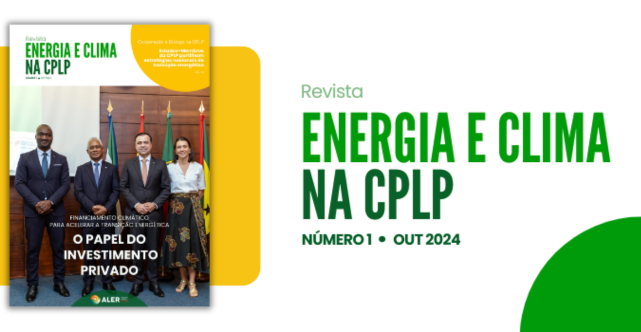
Dedicated to the 1st CPLP Energy and Climate Seminar, held on July 2 at the CPLP headquarters in Lisbon, the first edition of the Energy and Climate in the CPLP magazine brings together various articles addressing climate financing mechanisms aimed at accelerating the energy transition in CPLP Member States.

This edition highlights pathways for sustainability and energy transition in the region, shares some of the national strategies adopted by Member States, presents proposals to foster cooperation and dialogue within the CPLP, and emphasizes the crucial role of regulatory frameworks in promoting access to climate financing.

RELOP contributed with two significant articles: “The Role of Regulatory Frameworks in Promoting Access to Financing”, a summary of one of the seminar panels, and “GTE: RELOP’s Energy Transition Working Group”, which details the functioning and work carried out by the GTE.

Edited and published by ALER, this first edition also features contributions from the National Petroleum, Gas, and Biofuels Agency (ANPG).

See the full issue here.

RELOP promotes workshop on innovation ecosystem through regulation

In October, a workshop will be held to debate the mechanisms of energy generation and transmission auctions.

On Thursday (19/9), the RELOP Energy Transition working group, coordinated by ANEEL, organised the 7th workshop on fostering the innovation ecosystem through regulation. Focussing on the process of transforming the energy matrix towards a low-carbon economy, initiatives from ANEEL and Brazil’s National Agency for Petroleum, Natural Gas and Biofuels (ANP) were presented.

During the opening of the workshop, ANEEL’s Secretary for Innovation and Energy Transition, Paulo Luciano, emphasised the importance of Relop members participating in the search for innovations for each country’s electricity sector.

‘In Brazil, a public policy for investment, research and development in innovation was instituted more than 20 years ago and it was up to the regulatory agencies to implement and regulate these investments. In the case of ANEEL, we’ve already had more than 2,000 projects carried out, and around 25 per cent of the funds from these projects have been invested in renewable energy sources,’ said the secretary.

Created last year, the working group holds monthly workshops on topics related to the energy transition. More than 50 people took part in the training, including experts from Brazil and other Relop member countries, to discuss ways of achieving greenhouse gas emission neutrality targets by 2050.

Technicians from the Agency explained the functioning of public policies for investment in research, development and innovation in the Brazilian electricity sector, with an emphasis on the technical call for hydrogen.

At ANEEL’s invitation, ANP representatives presented initiatives from the research, development and innovation programmes in Brazil’s oil, gas and biofuels sector, which aim to stimulate the adoption of new technologies.

According to data from the Energy Research Company , between 2013 and 2022 ANEEL and ANP were the public institutions that most invested in RD&I.

1st Joint International Conference ARIAE-RELOP

The Ibero-American Association of Energy Regulatory Authorities (ARIAE) and RELOP are organizing the 1st Joint International Conference of ARIAE and RELOP, which will focus on the theme “The Role of Regulation in the Current Energy and Climate Landscape” The event will take place on November 6 at the Itaipu Binational Hydropower Plant in Foz do Iguaçu, Brazil.

Hosted by the Brazilian Electricity Regulatory Agency (ANEEL) and Itaipu Binational, the conference will center on discussions about the energy transition towards a low-carbon economy and the numerous transformations expected across various regulated sectors.

The panels aim to address the need for regulatory improvements that align with the contemporary economic landscape, covering topics such as:

  • Energy markets in the context of economic decarbonization;
  • Regulatory challenges involved in the energy transition;
  • The importance of resilience in electrical systems and the available technologies for their improvement;
  • Enhancement and modernization of tariff regulation.

In addition, workshops organized by RELOP Working Groups will be held on November 7 at the Itaipu facilities, followed by the XX RELOP General Assembly on November 8.

I International ARIAE-RELOP Conference

RELOP and the Ibero-American Association for Energy Regulators (ARIAE) are organising the I International ARIAE-RELOP Conference, which will be dedicated to the theme “The role of regulation in the current energy and climate panorama”, which will take place on the 6th of november, on Itaipu Binacional’s Hydroelectric Power Plant, in Foz do Iguaçu, Brazil.

The National Agency of Electric Energy (ANEEL) and Itaipu Binacional are the hosts of the event, which will have as the main focus a reflection on the energy transition for a low carbon economy and the many transformations which will be observed in the various regulated sectors.

The panels aim to generate a debate on the need for regulatory improvements that converse with the contemporary economic scenery, approaching themes such as:

  • the energy markets in the context of decarbonisation of the economies;
  • the regulatory challenges inserted in the energy transition;
  • the importance in the resilience of the energetic systems and the available technologies for its improvements;
  • improvement and modernisation of tariff regulation.

In the context of the event, workshops will take place in the Itaipu facilities, which will be promoted by the RELOP Working Groups, on the 7th of november, and RELOP’s XX General Assembly, on the 8th of november.

For more information: https://www.gov.br/aneel/pt-br/assuntos/eventos/eventos-vigentes/1a-conferencia-internacional-conjunta-ariae-relop

3rd CPLP Energy and Climate Seminar

Sob a temática “O contributo dos mecanismos de financiamento climático para a aceleração da transição energética nos Estados-Membros da CPLP”, o Under the theme “The contribution of climate finance mechanisms to accelerating the energy transition in CPLP Member States”, the 3rd CPLP Energy and Climate Seminar will focus mainly on Carbon Markets and will take place on November 4, 2024, in Rio de Janeiro, Brazil.

Bringing together members of government and financiers in a debate on the energy transition in CPLP member states, the 3rd CPLP Energy and Climate Seminar will focus on:

  • the cooperation between public entities and the private sector in CPLP countries;
  • the advances in carbon market regulations in different countries;
  • the use of carbon credit financing mechanisms to support the energy transition;
  • the challenges and opportunities in the commercialization of carbon credits.

The 3rd CPLP Energy and Climate Seminar is being promoted by the Government of São Tomé and Príncipe, which holds the Presidency-in-Office of the Community of Portuguese Speaking Countries (CPLP), together with the Energy Thematic Commission of the CPLP Consultative Observers, coordinated by Lusophone Renewable Energy Association (ALER) and RELOP.

RELOP organises workshop on energy storage

More workshops will be held until November to discuss the effects of the energy transition on member countries

On Thursday 22 August, the Energy Transition Working Group of the Association of Energy Regulators of Portuguese-Speaking Countries (RELOP) held an online workshop on ‘Energy Storage Systems for the Energy Transition’.


With more than 100 participants, regulators from member countries debated energy storage technologies, international cooperation, regulatory challenges, the changing role of electricity consumers and projects on the subject.


During the event, representatives of Brazilian public organisations and companies operating in the country presented research projects, regulation of energy storage systems and a pilot project with a battery energy storage system in the transmission system.


With one workshop per month until November this year, RELOP’s energy efficiency working group aims to encourage the sharing of knowledge and experiences among participants.

Conclusions of the RELOP Countries’ Energy Models Workshop Report Release

On April 24, 2024, the RELOP (GTE) Energy Transition working group held its third online workshop, bringing together specialists and representatives from six Portuguese-speaking countries: Angola, Brazil, Cape Verde, Mozambique, Portugal, and São Tomé and Príncipe. The event, which attracted over 70 participants, focused on the theme “Energy Models.”

During the workshop, the realities of each country’s energy sector were presented and discussed, highlighting the diversity of challenges and opportunities. The speakers shared data on the energy matrix, socioeconomic context, energy consumption, greenhouse gas (GHG) emissions, and the measures adopted to reduce them. In addition, each country provided a preview of their energy transition and the future of their energy sector.

One of the key conclusions of the meeting was the realization that there is no one-size-fits-all solution to the challenges of energy transition, especially in the context of RELOP countries, which face significant economic and social challenges. It became clear that each nation must develop its own strategy to achieve its goals, balancing three fundamental aspects of any energy sector: supply security, socio-environmental sustainability, and maintaining energy prices that are affordable and compatible with the local economic reality.

The full report of the GTE Energy Models Workshop is now available for online reading.