Workshop of the Energy Transition Working Group on the topic “New Legal Framework for Electric Mobility”

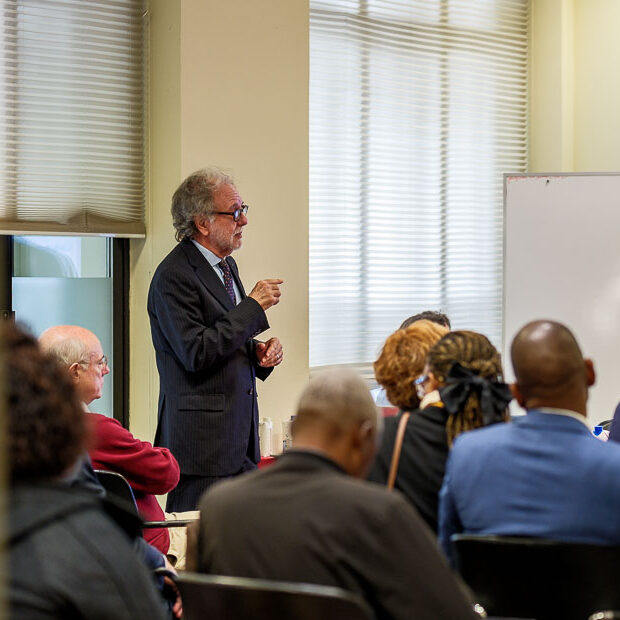
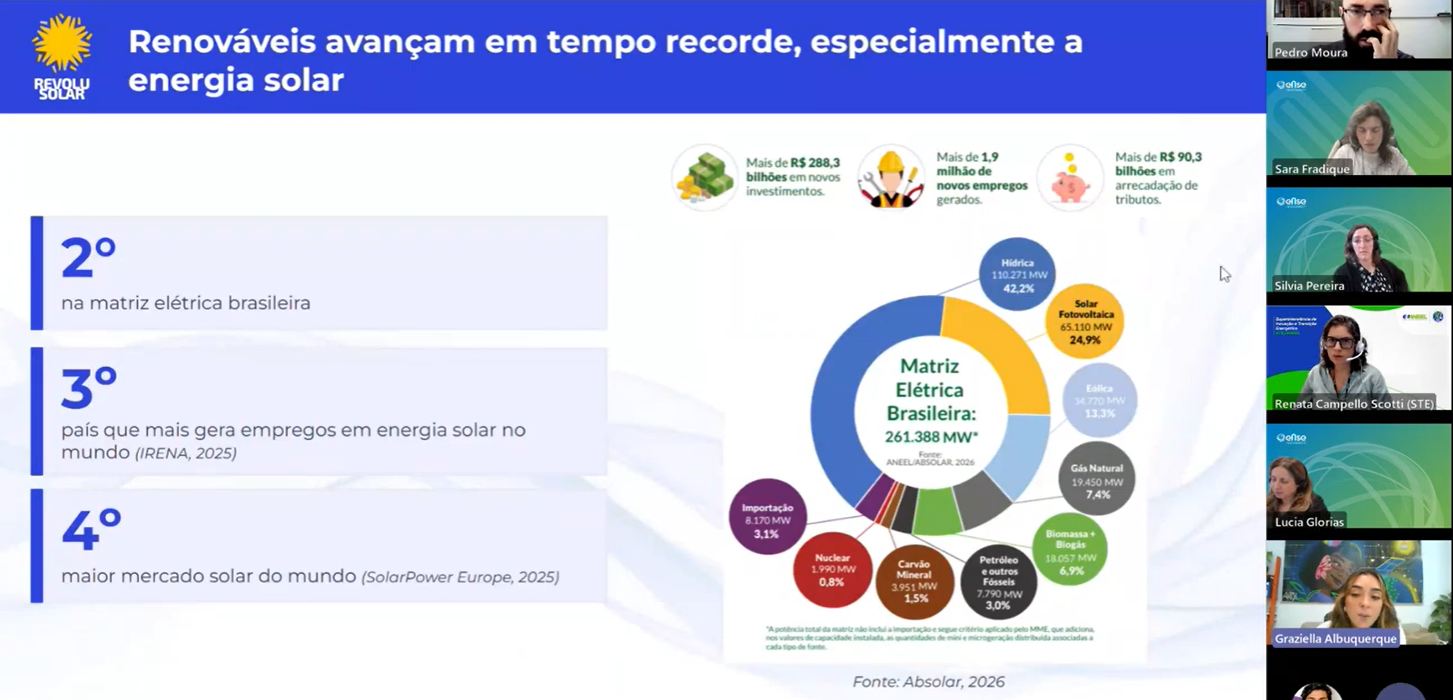
On 24 November, the Energy Transition Working Group (GTE) of RELOP – Association of Energy Regulators of Portuguese-speaking Countries – organised an online workshop, focusing on the theme ‘New Legal Framework for Electric Mobility’.

The session had presentations from representatives from ERSE and ENSE, from Portugal, who shared their approaches to the regulatory adaptation of electric mobility within the new legal framework, in particular the new rules and those necessary for the transition between the two models.

During the workshop, the importance of consolidating Lusophone cooperation was reinforced, as well as investing in innovative solutions that ensure a smooth transition between models and promote more sustainable, efficient and safer mobility.

José Bigares, from ERSE’s Infrastructure and Networks Directorate, presented the regulations of the new legal regime for electric mobility, in particular Decree-Law No. 93/2025 of 14 August. His presentation focused on the main changes in the new legal framework for electric mobility. He highlighted the strengthening of the role of Charging Point Operators, the creation of mobility service providers and the data aggregator, bringing greater efficiency and simplicity to the relationship with users.

Next, Emanuel Delgado, Head of the Inspection Department, and Fernando Martins, Head of the Control and Prevention Unit at ENSE, presented the Portuguese model for electric mobility, focusing on operation, inspection and transparency. Fernando Martins highlighted the transformation of the sector over the last 15 years: from a centralised model to a more open, flexible and competitive market. The end of the specific marketer, ad hoc charging and the integration of solutions such as self-consumption, storage and smart charging promise a more intuitive experience and lower operating costs. Emanuel Delgado presented ENSE’s enforcement application, which has already enabled more than 375 actions since 2020, contributing to greater alignment of the sector with legal requirements.

The presentation of the electric mobility operational model in Portugal — including field operations, the national register of charging points, ENSE’s inspection checklist and real-life cases — highlighted how digital tools, robust processes and effective regulation are essential to ensure transparency, trust and resilience in a rapidly growing sector.

The workshop ended with a rich debate on licensing, tariffs, network quality and social inclusion, reinforcing the role of Lusophone cooperation in building a solid regulatory framework for a fair and sustainable energy transition.

XXII General Assembly

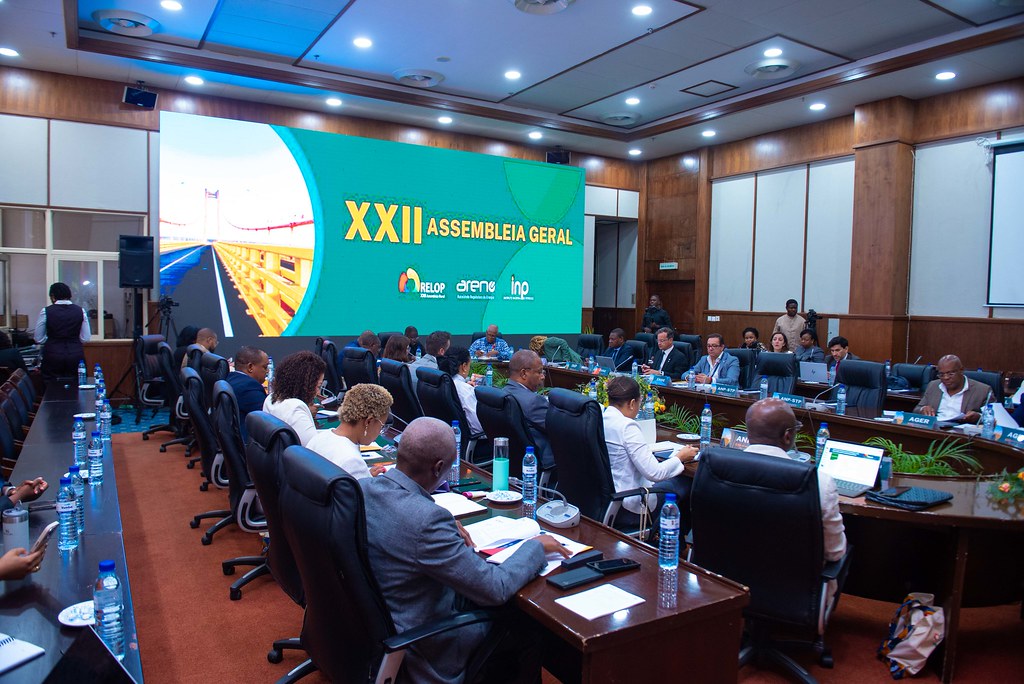
On the 24th of October 2025, RELOP’s XXII General Assembly took place, in Maputo, Mozambique, and had the presence of 30 members.

The meeting began with an opening statement, in which the President of the General Assembly, Paulo da Graça, welcomed all participants and proceeded with the approval of the agenda.

The main projects underway were the first items to be discussed, with the Executive Director presenting the ARME training project, the EU-Angola Dialogues programme, and the preparatory work for RELOP’s first participation in the World Forum of Energy Regulators (WFER).

The RELOP secretariat then presented the new Strategic Plan for 2026-2030, as well as the process of its preparation, which involved contributions from all RELOP members. The Activity Plan and Budget for 2026 were also presented. Both documents were unanimously approved by the members present.

The last item on the agenda was the election of the new governing bodies of RELOP, which will take up their responsibilities on the 1st of January 2026.

RELOP’s XV Anual Conference

On the 22nd of October 2025, RELOP’s XV Anual Conference took place, in Maputo, Mozambique, and gathered over 200 participants.

The event, organised by RELOP, in partnership with ARENE and INP, gathered experts from the energy sector from multiple CPLP countries, who shared more about their perspectives and experiences on the different realities from the energy sector.

This event provided an opportunity to reflect together about the pathways to develop an energy transition that is fair, sustainable, and safe for everyone.

With panels on topics such as the European Union’s Carbon Border Adjustment Mechanism (CBAM), the role of regulation in attracting sustainable investment, the challenges and incentives of electric mobility, and energy security and local value, the conference provided an opportunity to learn about the perspectives and experiences of different realities in the energy sector, with perspectives from all Portuguese-speaking countries.

The conference was marked by important discussions about the future of energy in the lusophone community, where it was made clear the fundamental role that regulation should have on the path to an inclusive and sustainable energy transition.

2030 Roadmap for Cooperation on Energy and Climate in CPLP Countries

The Thematic Commission on Energy and Climate of the CPLP Consultative Observers, coordinated by ALER and co-coordinated by RELOP, was present at COP30, in Belém do Pará (Brazil), to present the 2030 Roadmap for Cooperation on Energy and Climate in CPLP Countries – a strategic document released in October, in Mozambique, during the I Energy and Climate on CPLP Week. The event took place on Friday, 14th of November, at the Portugal Pavilion, and was live streamed on the Portuguese Ministry of Environment and Energy’s Youtube channel.

The Roadmap developed throughout 2025 through a multilateral process involving governments, regional and international institutions, as well as the private sector, defines four strategic areas of cooperation: Energy Planning; Capacity Building and Leadership; Mobilisation of Financing; and Acceleration of Energy Transitions. More than a common agenda, the document represents a collective vision of transformation, progress and development, serving as a starting point for joint, participatory and results-oriented actions.

Representing the Energy and Climate Thematic Commission of the CPLP Advisory Observers at COP30, Sandoval Feitosa (President of RELOP and Director-General of ANEEL) highlighted the strategic importance of the 2030 Cooperation Roadmap within the CPLP countries: “We are a group of countries spread across four continents, distinct in our realities, but united by a language and cultural heritage that brings us together. It is precisely in this balance between diversity and common identity that lies the strength of the CPLP and our ability to transform cooperation into concrete results.”

Next, Djane Melo (Deputy Coordinator of RELOP’s Energy Transition Group) gave a detailed presentation of the document, highlighting its potential to boost financing, accelerate projects and strengthen the international positioning of CPLP countries. During the presentation, the next steps of the Roadmap were also outlined, including the widespread dissemination of the document with a view to gathering proposals for new initiatives; the involvement of new international partners to support its implementation; the presentation of the progress of the Roadmap and the implementation of its strategic axes during the II CPLP Energy and Climate Week – to be held in May 2026, in Guinea-Bissau; the launch of thematic cooperation platforms in CPLP countries; and coordination with international agendas, including the presentation of the Roadmap’s impact at the next COPs.

The event in Belém consolidated the position of Portuguese-speaking countries as an active, coordinated and committed bloc in the global energy and climate agenda, demonstrating that cooperation between CPLP Member States can be a driver of innovation, investment and solutions tailored to national and regional realities.

CPLP Colloquium on Energy

On the 21st of October 2025, the CPLP Colloquium on Energy took place, in Maputo, Mozambique, and gathered over 100 participants.

The event, organised by RELOP’s Work Groups in partnership with ALER, gathered experts from the energy sector in order to promote the exchange of knowledge and reflection on strategies for advancing the energy transition in the community of Portuguese-speaking countries.

With panels that touched on themes such as the Energy and Climate Cooperation Roadmap in the CPLP, energy eficiency as a pilar for regulating the energy transition, and the role of gas and oil on energy security, the event served as an important moment of reflection about the current energy situation in CPLP countries. IEA was also present, and shared for the first time their National Climate Resilience Assessment for Mozambique.

RELOP’s Energy Transition Work Group used this opportunity to launch the Fact Sheets that they have been developing, which gather practical examples of measures, policies, and projects implemented in member countries, contributing to a energy transition that is fair, sustainable, and inclusive.

To close the event, there was a round table where several RELOP regulators reflected on the regulatory challenges for the energy transition.

The colloquium was marked by moments of sharing, reflection, and inspiration on the challenges and opportunities of energy transition in the Lusophone countries, where the spirit of openness to joint action was clear. The fundamental role that regulation plays in the path towards an inclusive and sustainable energy transition was highlighted.

Energy Transition Working Group Fact Sheets

The RELOP Working Group on Energy Transition has been developing a set of Fact Sheets that showcase practical examples of measures, policies and projects implemented in member countries, contributing to a fair, sustainable and inclusive energy transition. These fact sheets present, in a concise and comparable manner, the main national initiatives in the field of energy efficiency, renewable energy, electric mobility, green hydrogen and other emerging vectors.

Based on the Golden Circle methodology and the Energy Trilemma, the Fact Sheets aim to strengthen knowledge sharing and promote regulatory dialogue among Portuguese-speaking countries, highlighting the role of regulatory bodies and public policies in advancing the energy transition.

See below for fact sheets on each country (Portuguese only):

Angola
Angola
Angola
Angola
Angola
Angola
Brasil
Brasil
Moçambique
Moçambique
Moçambique
Moçambique
Moçambique
Portugal
Portugal
Portugal
Portugal
Portugal
Portugal
Portugal
São Tomé e Príncipe
São Tomé e Príncipe
São Tomé e Príncipe
São Tomé e Príncipe
São Tomé e Príncipe
São Tomé e Príncipe
São Tomé e Príncipe

3rd Edition of CPLP Energy and Climate Magazine

The third edition of the publication accompanying the CPLP Energy and Climate Seminars is now available.

Dedicated to the 4th CPLP Energy and Climate Seminar and the II CPLP Conference on Energy, which took place in Cascais, on the 27th and 28th of May 2025, this issue gathered summaries of the sessions, articles and highlights from both events.

The II CPLP Conference on Energy, with the theme “Driving a Resilient, Sustainable and Inclusive Energy Transition for the CPLP” brought together, over two days, 430 participants from all CPLP countries and generated more than 100 news stories. The winner of the Maria Cristina Portugal 2025 Award was also announced at this event.

The CPLP Energy and Climate Magazine is edited and published by ALER, with contributions from RELOP and other partners. For the latest edition, RELOP contributed with the article: “Creating an attractive environment for investment” by the author Cecílio Sacramento, Administrator of the General Regulatory Authority of São Tomé and Príncipe (AGER).

Frequently Asked Questions

Maria Cristina Portugal Award 2025 – Energy Sustainability

1 – What is the Maria Cristina Portugal Award?

It is the RELOP Regulation Technical Award, which aims to promote the dissemination and sharing of knowledge in the area of ​​energy regulation.

2 – What is the theme of the article?

In the 2025 edition, the chosen theme was “Energy Sustainability.”

3 – What is “Energy Sustainability”?

Energy sustainability is the ability to meet the energy needs of today’s society without compromising future generations. This concept seeks to balance economic development, environmental protection, and social justice in the use and production of energy.

Energy sustainability is crucial to addressing global challenges such as climate change and growing energy demand, promoting a more balanced and resilient future.

4 – What articles can be submitted?

Any article, scientifical article or regulatory practice is elegible, if it meets the following criteria:

Original authorship; originality, innovation or publication less than three years ago (counting from January 1st of the year of the award); legal affiliation of at least one author with a RELOP entity; writing in Portuguese; delivery within the established deadlines; and maximum limit of 8,000 words.

5 – Who can participate?

Employees of any RELOP member entity may apply.

Academic members, journalists, or other experts may also compete, provided they are co-authored with at least one collaborator of any RELOP member. However, the prize will always be awarded to the collaborator of the RELOP member entity.

6 – I have participated previously. Can I participate again?

According to the current regulations, winners of previous MCP Awards will not be eligible for this edition of the competition.

Other authors may resubmit their article or a new article.

Honorable mentions may also compete again.

7 – What is the prize?

Only one article will be selected for the MCP Award. The award includes a certificate to the author, an invitation to publish on the RELOP website or specialised platforms, and the opportunity to present the winning work at an international event sponsored by RELOP.

In cases of co-authorship, the invitation will be sent to the author linked to a member entity or, if there is more than one, to the main author.

8 – Are there any honorable mentions?

Yes. Honorable mentions may be awarded by the jury, with the right to a certificate attesting to this fact and publication on the RELOP website or other specialised platforms.

9 – How can I submit my application?

To be eligible to participate, the article must be submitted to the RELOP Secretariat via email at secretariado@relop.org along with the completed Application Form.

The Secretariat will send an email confirming the validity of your entry within 3 business days.

10 – What is the deadline for submitting applications?

The applications may be submitted until April 9 2025. For the purposes of closing the deadline, 23:59 on April 9, 2025 will be considered, according to the local time of the author’s submission country.

CPLP Colloquium on Energy (2025)

On October 21st, the CPLP Colloquium on Energy will be held at the Montebelo Indy Maputo Congress Hotel in Maputo, Mozambique, with a focus on the theme “Regulatory Pathways for the Energy Transition.”

The event, organized by the RELOP Working Groups in partnership with ALER, will take place from 8:00 a.m. to 6:00 p.m. local time and promises to bring together experts, authorities, and professionals from the energy sector to discuss the challenges and regulatory solutions for a sustainable energy transition in the CPLP countries.

The initiative aims to promote the exchange of knowledge and reflection on strategies for advancing the energy transition in the community of lusophone countries, focusing on innovative solutions, public policies, and the strengthening of multilateral cooperation in the energy and climate sectors.

15th Annual Conference for RELOP

The 15th Annual Conference of the Association of Energy Regulators of Portuguese-Speaking Countries (RELOP), dedicated to the theme “Regulating for Energy Sustainability in Portuguese-Speaking Countries,” will take place on October 22nd at the Montebelo Indy Maputo Congress Hotel, Maputo, Mozambique, from 8:00 a.m. to 6:00 p.m. local time.

At the Conference, co-organised by ARENE – Energy Regulatory Authority and INP – National Petroleum Institute, participants will have the opportunity to reflect on one of the most important issues of our time: energy sustainability.

This challenge has been addressed in different ways by the lusophone countries, with one common thread among them: the need to attract investment, with a special emphasis on African countries, where investment in the energy transition has lagged behind expectations.